Westbourne Grove
HOW IT STARTED
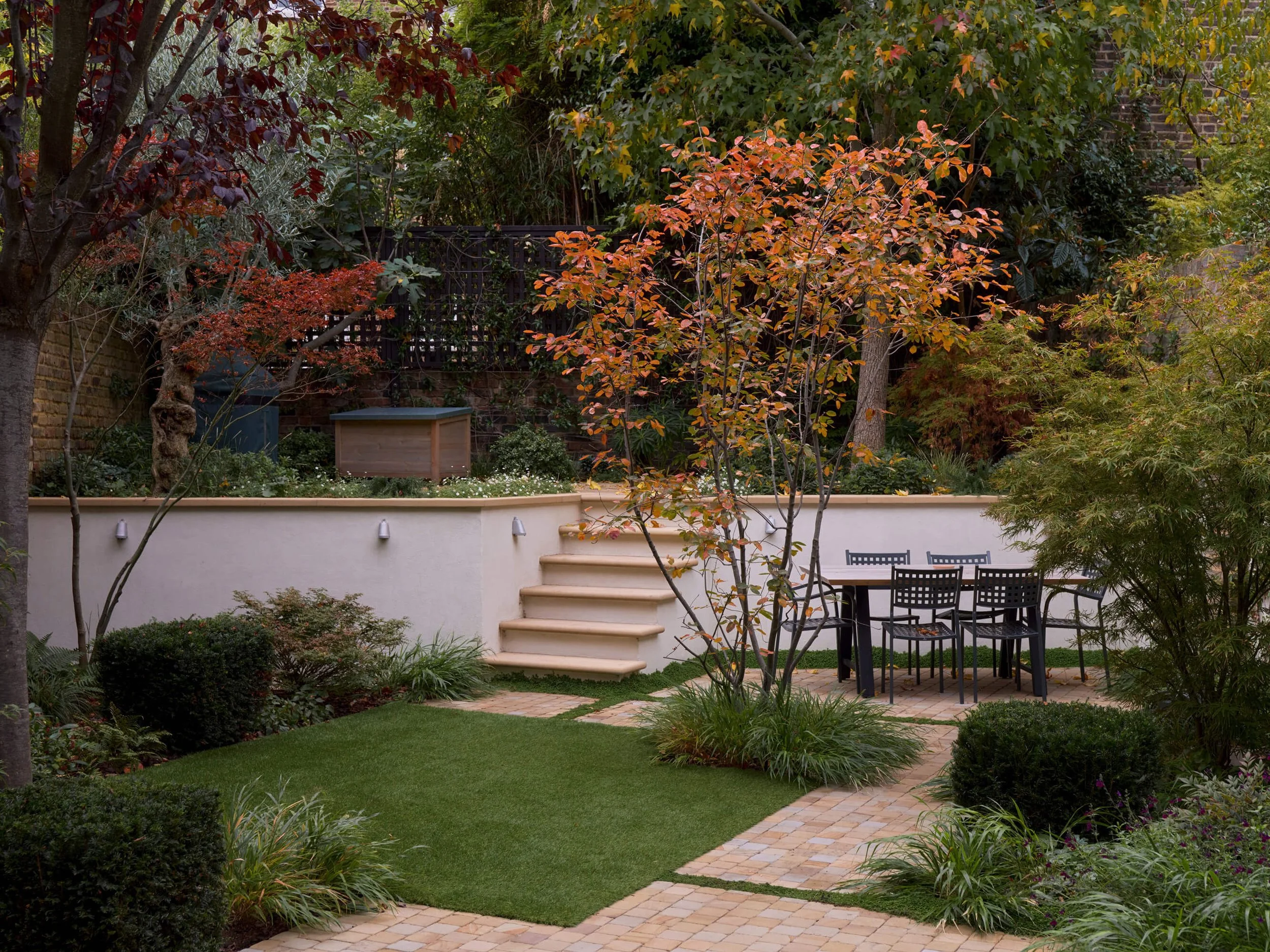
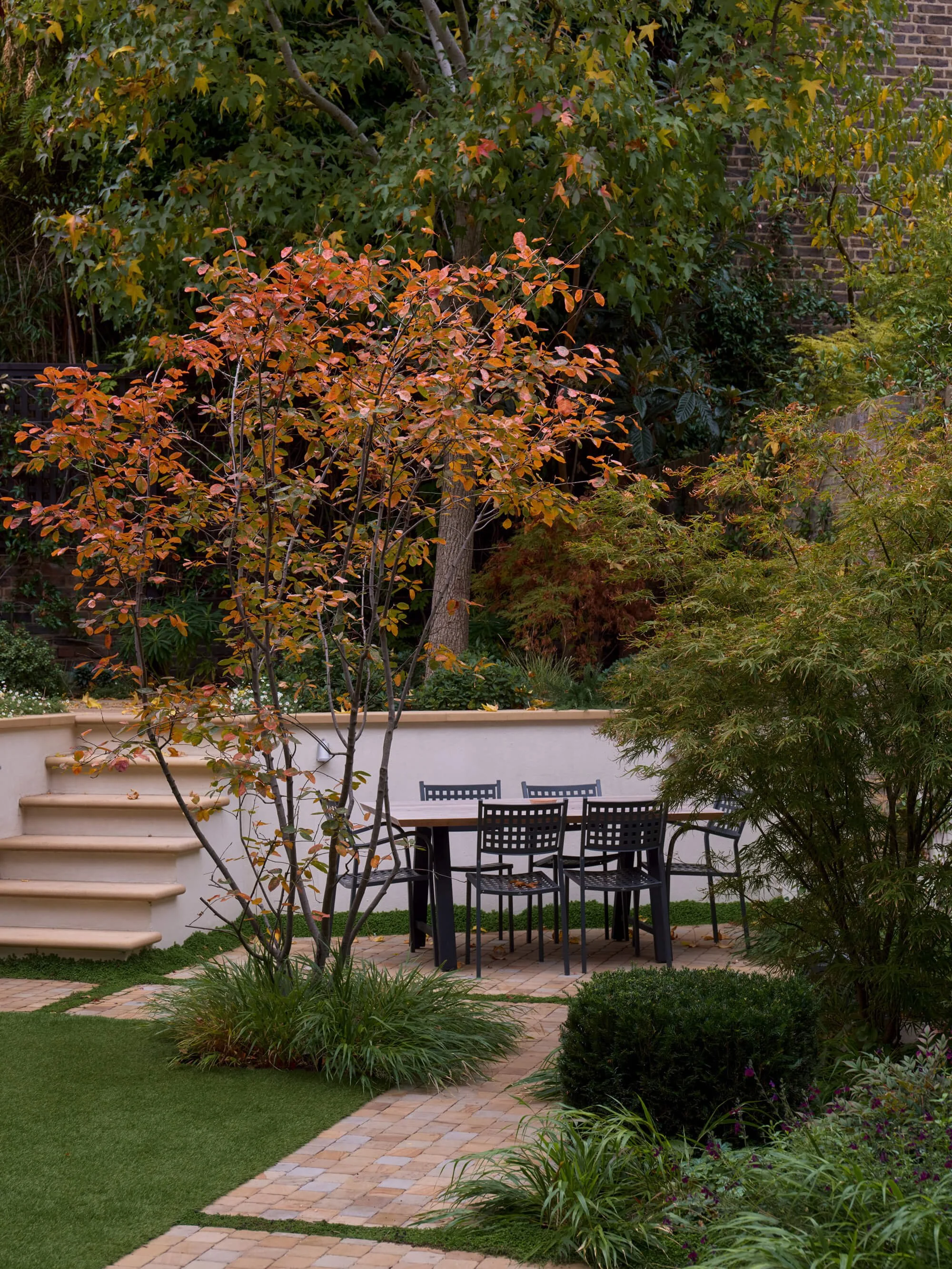
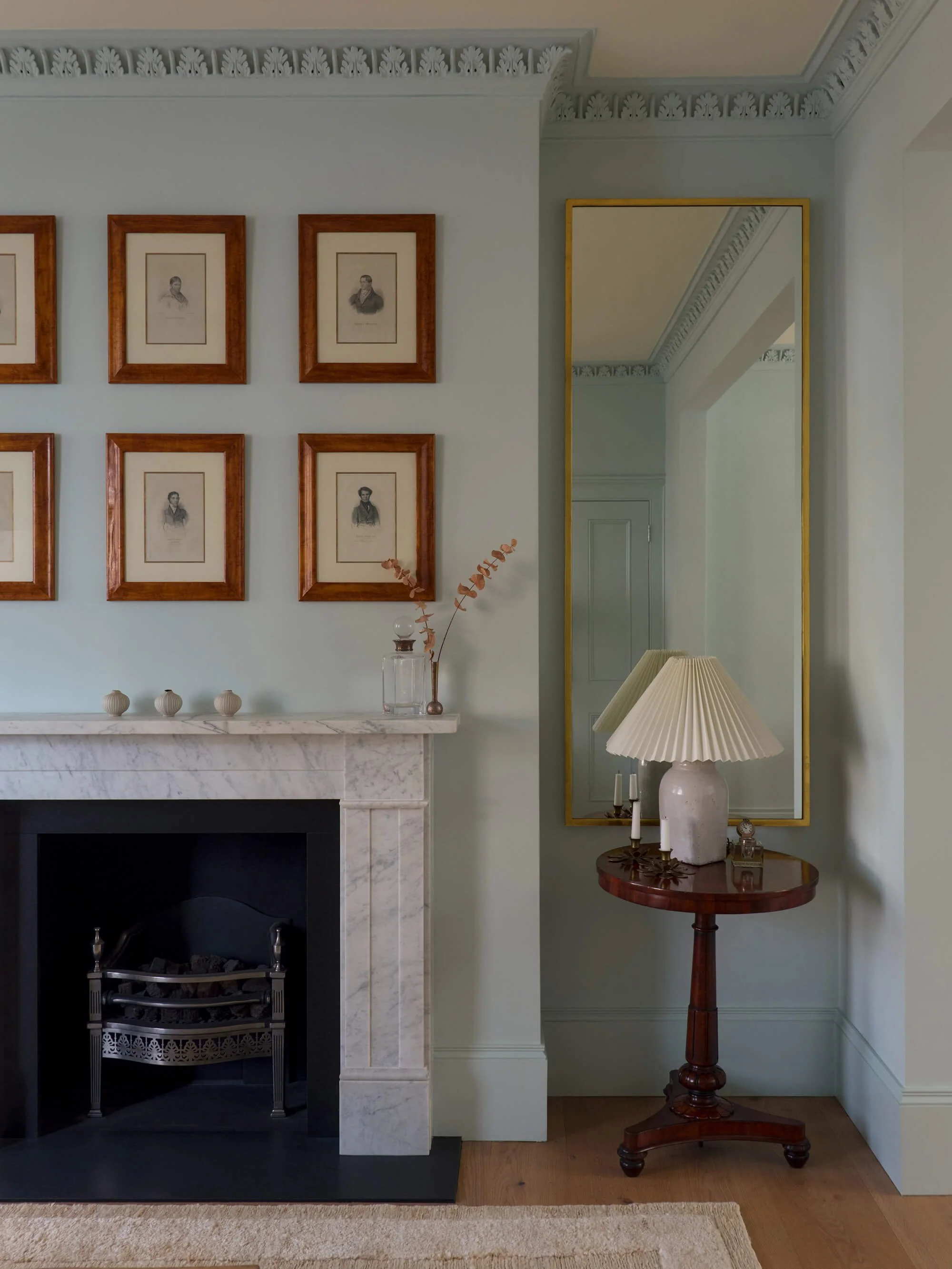
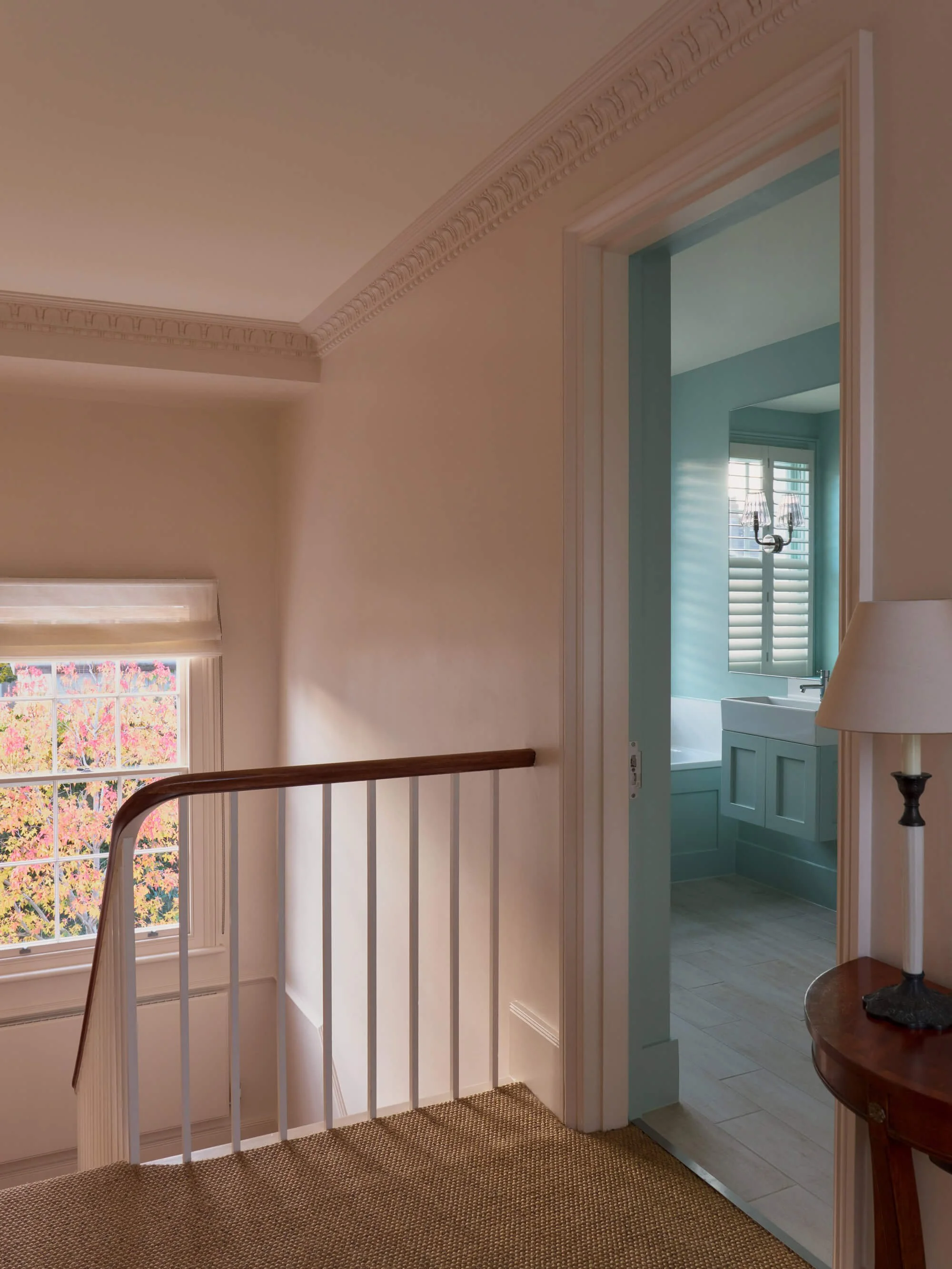
This late-19th-century five-storey townhouse, with its convex bay façades and well-preserved decorative detailing, provided a strong architectural foundation for a design approach focused on balancing heritage with contemporary sensibility.
THE INTENTION, THE WORKINGS
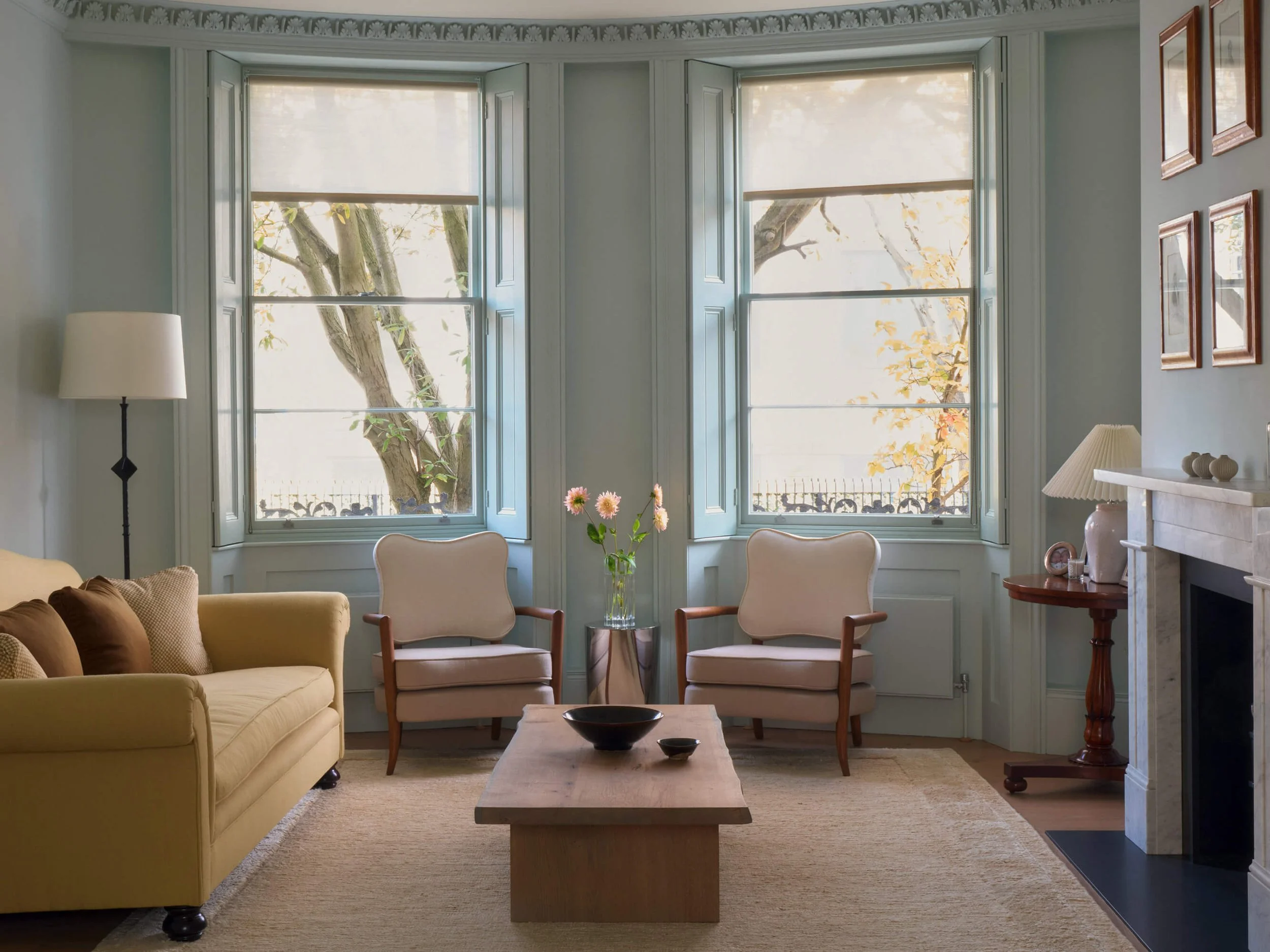
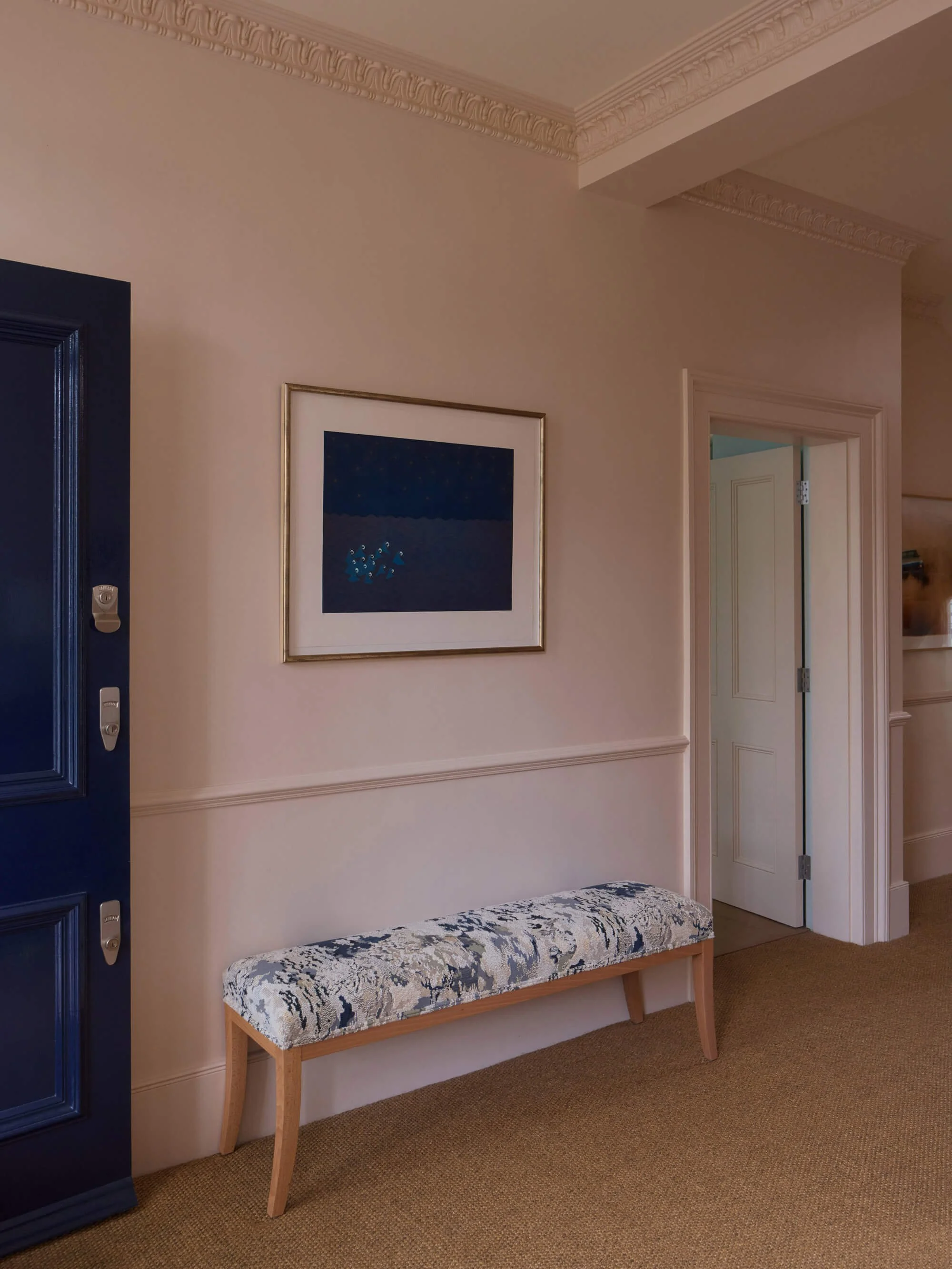
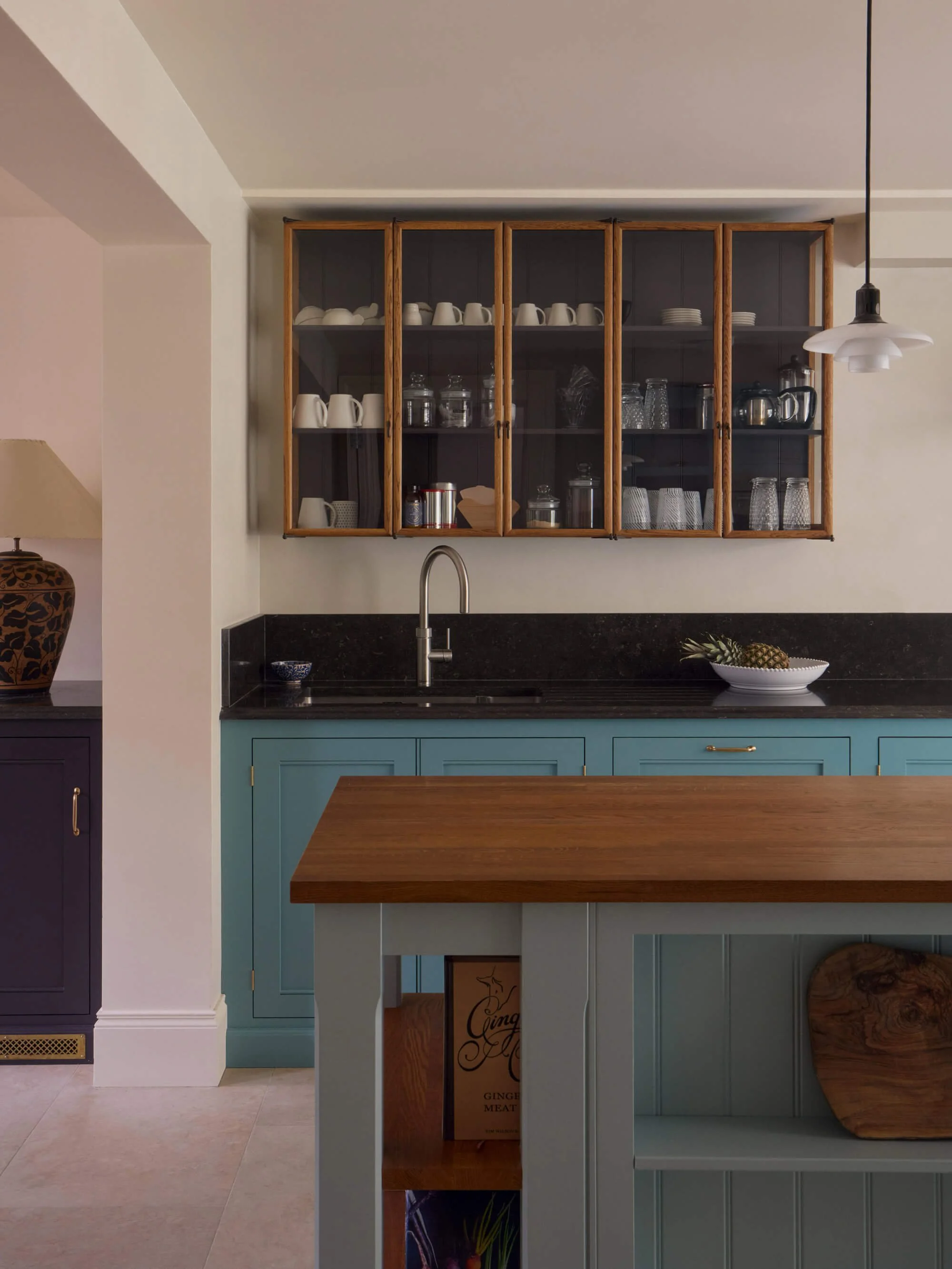
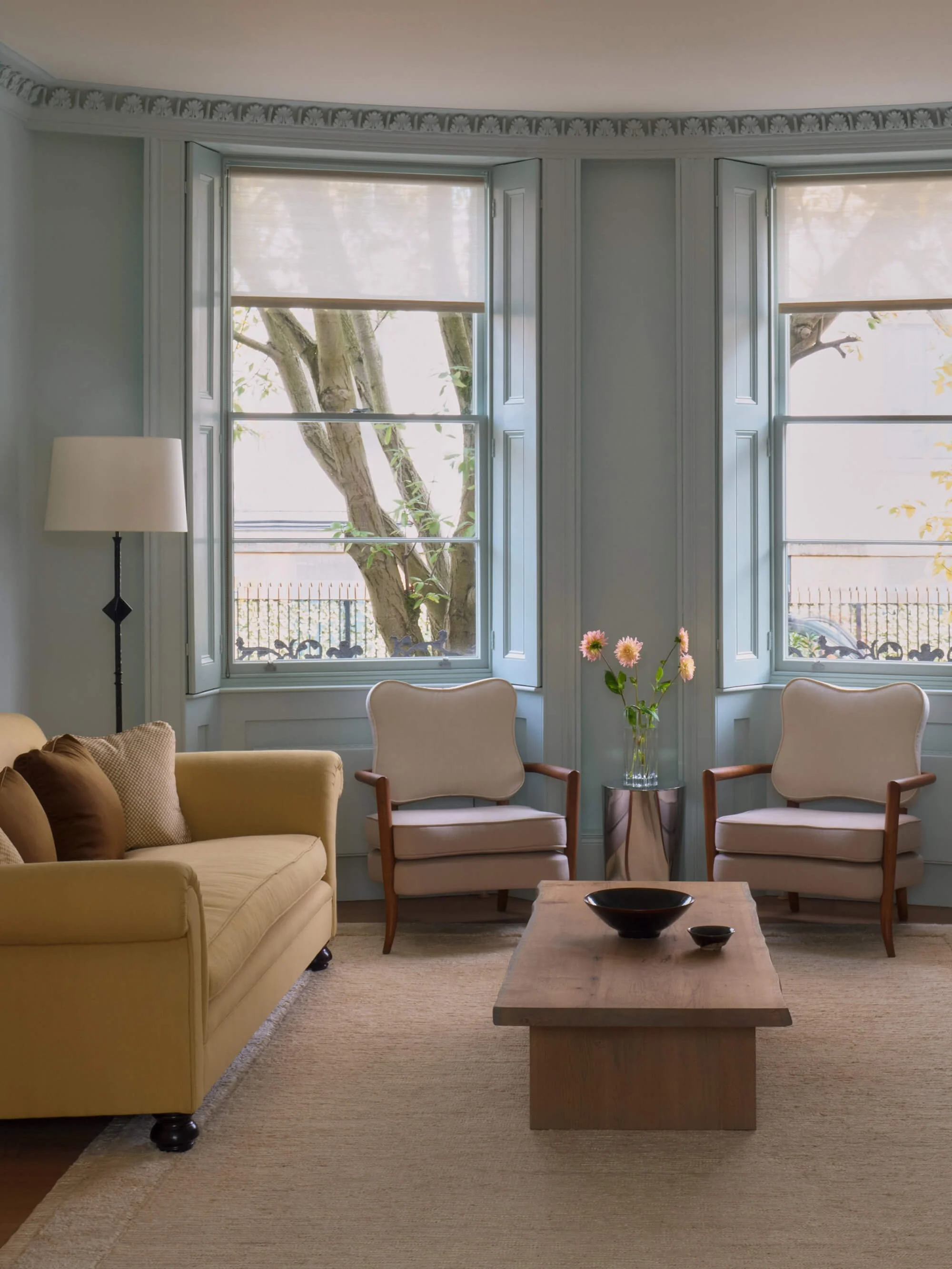
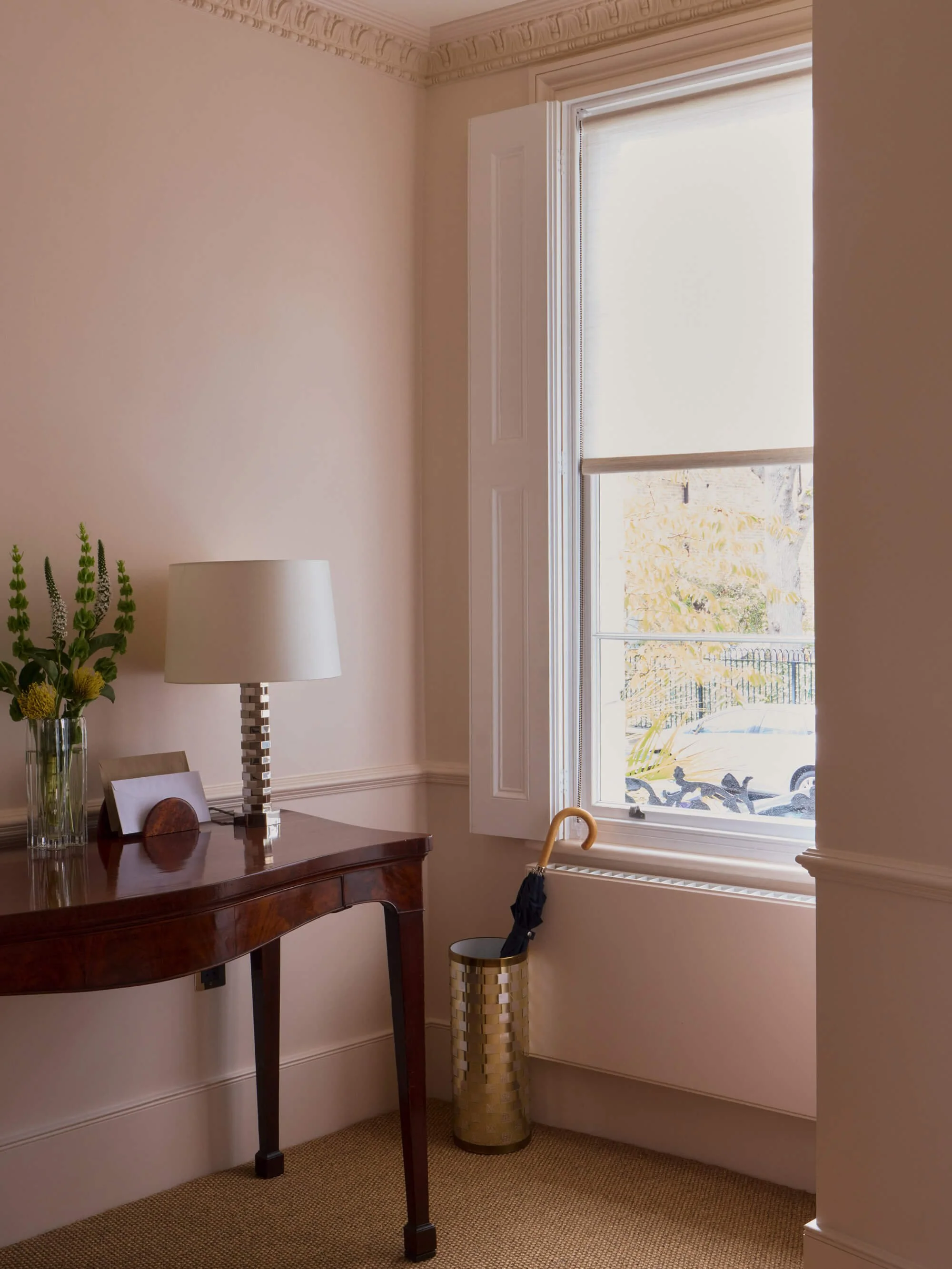
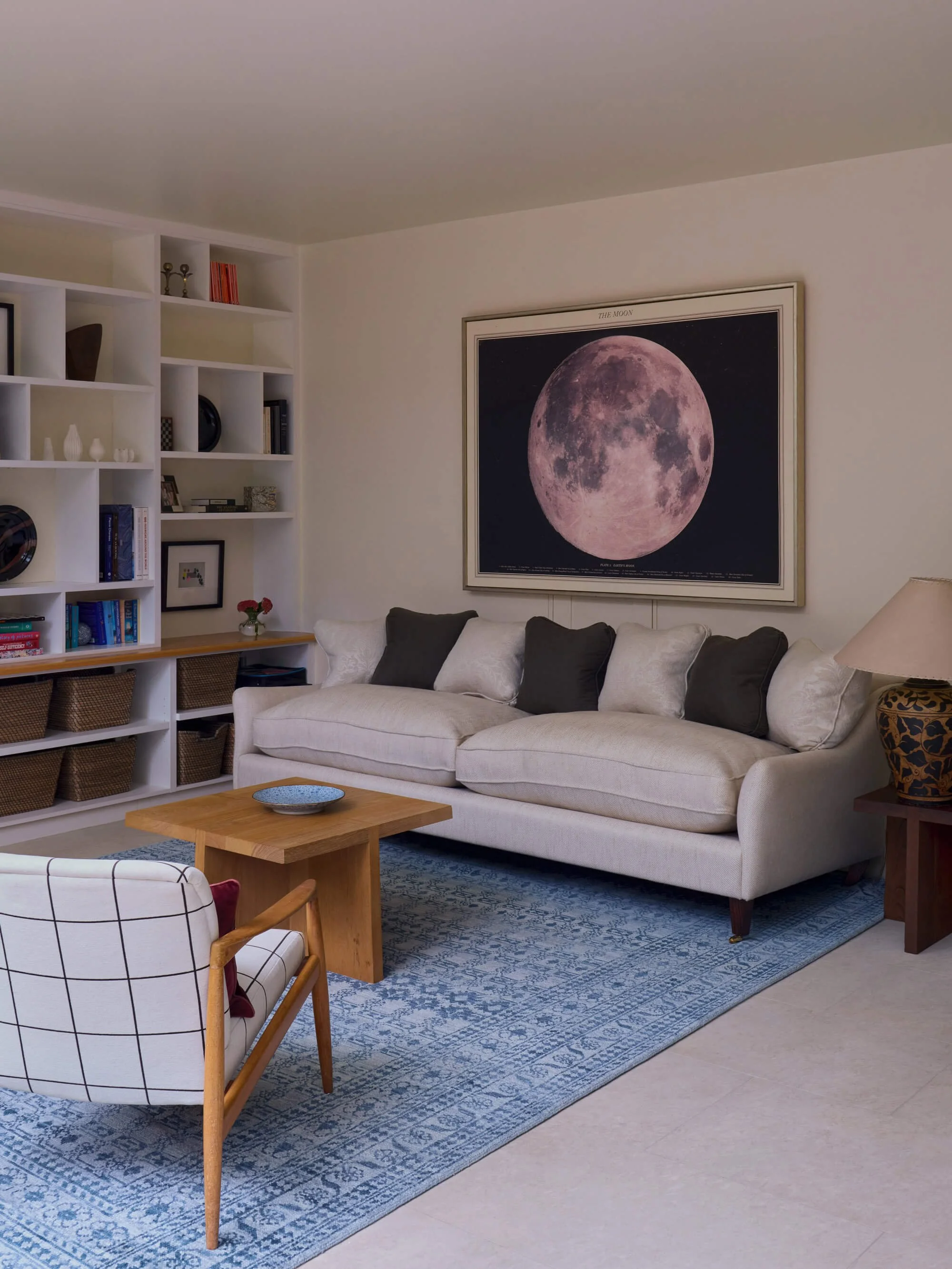
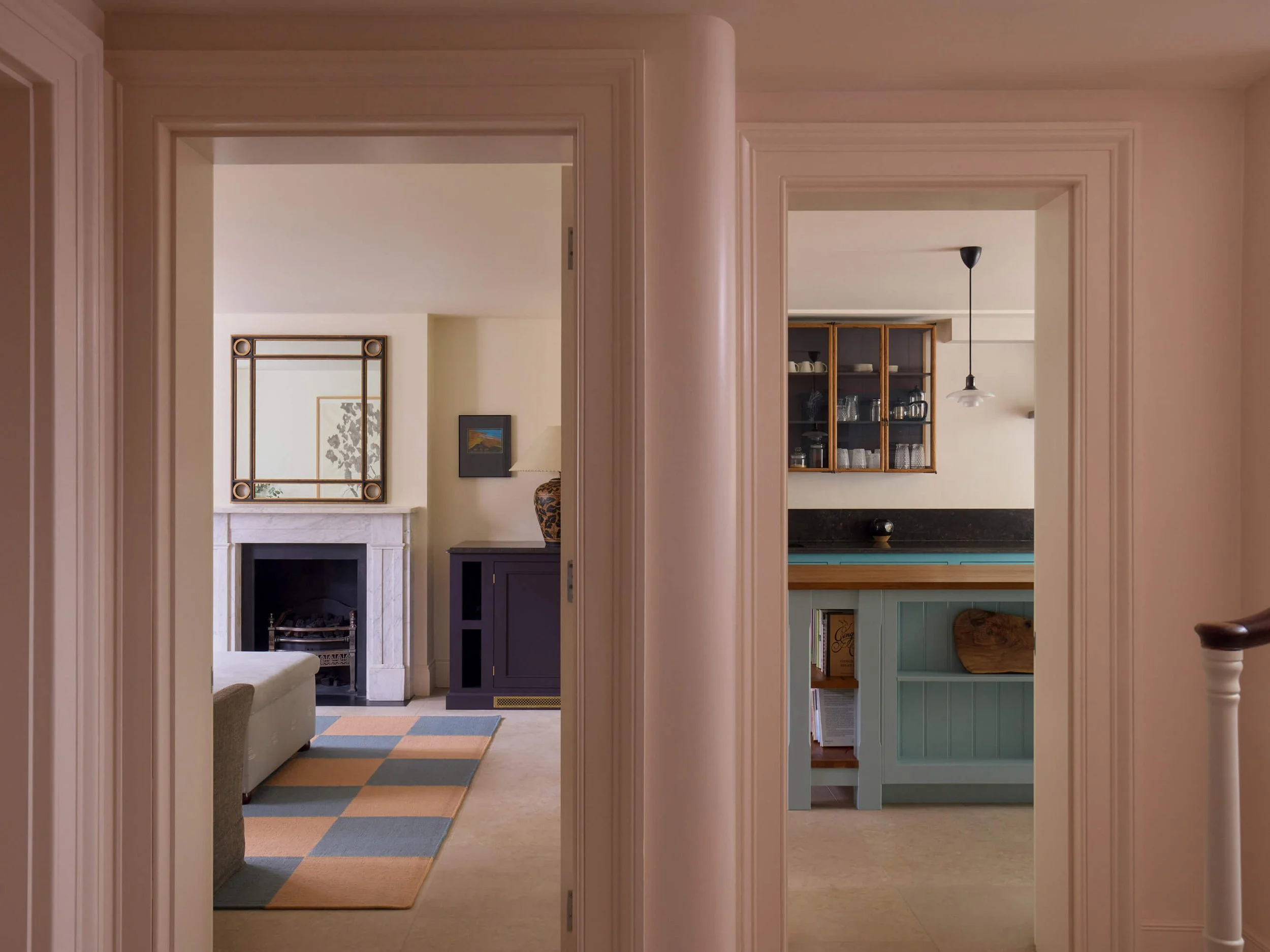
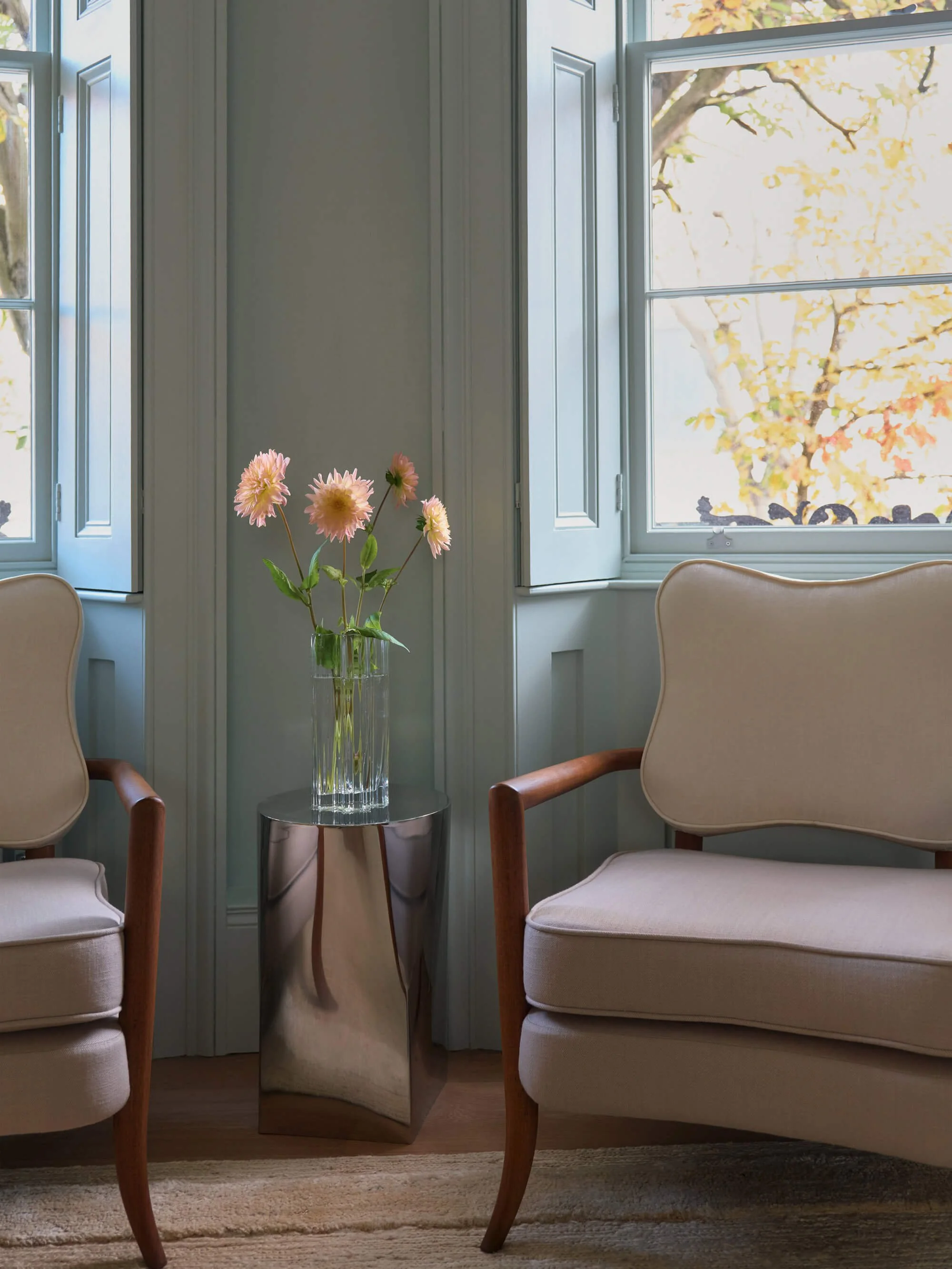
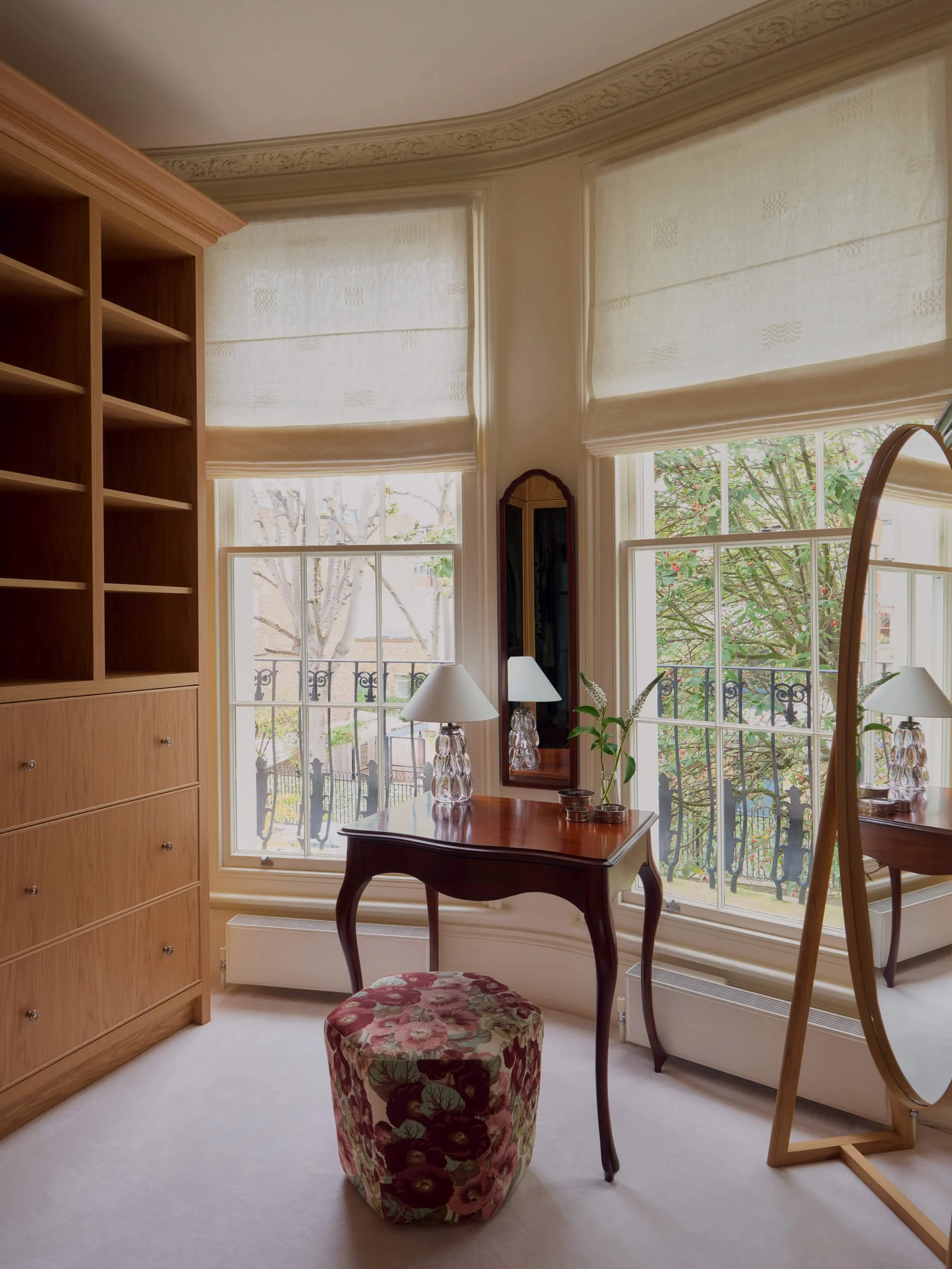
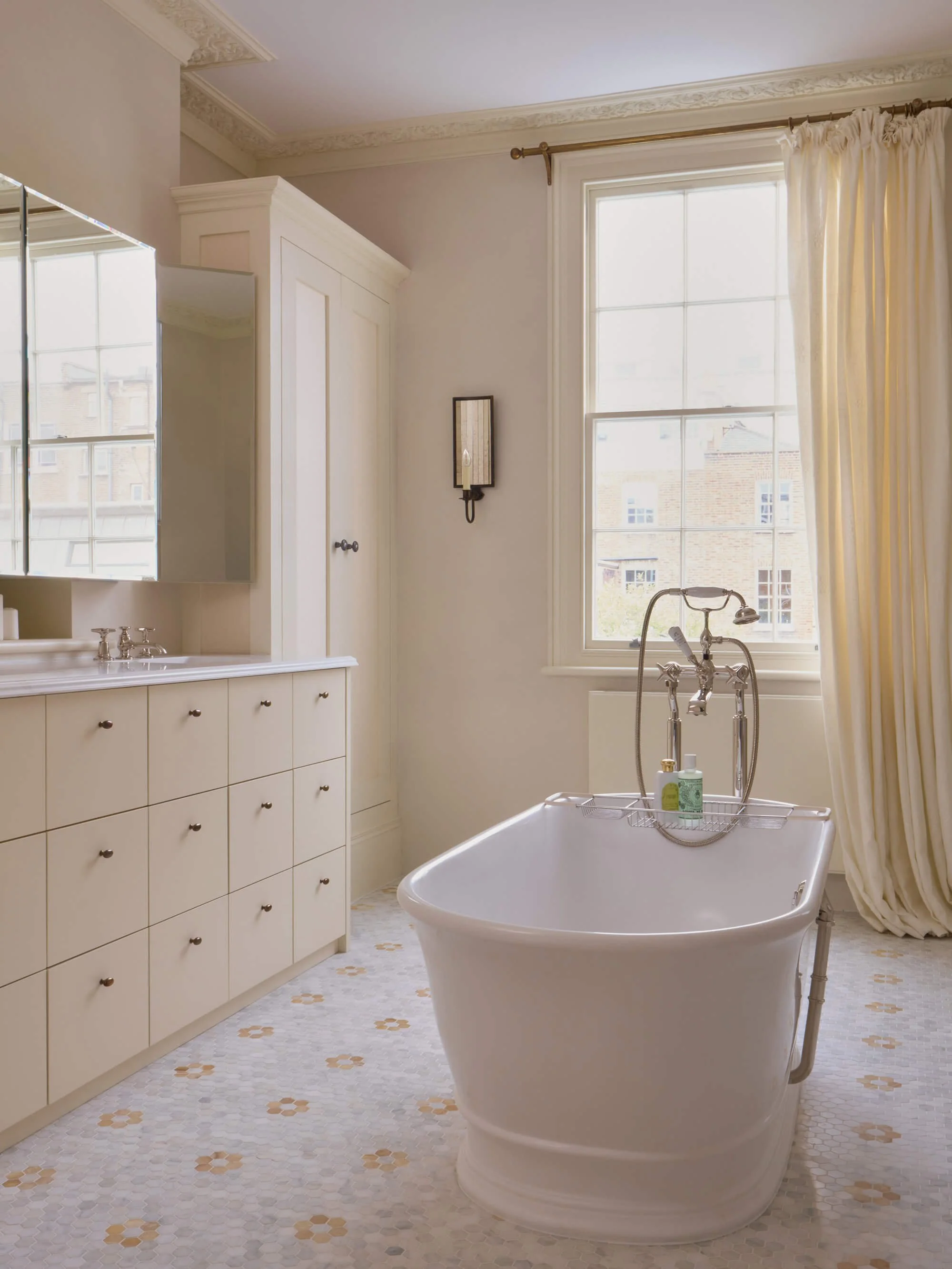
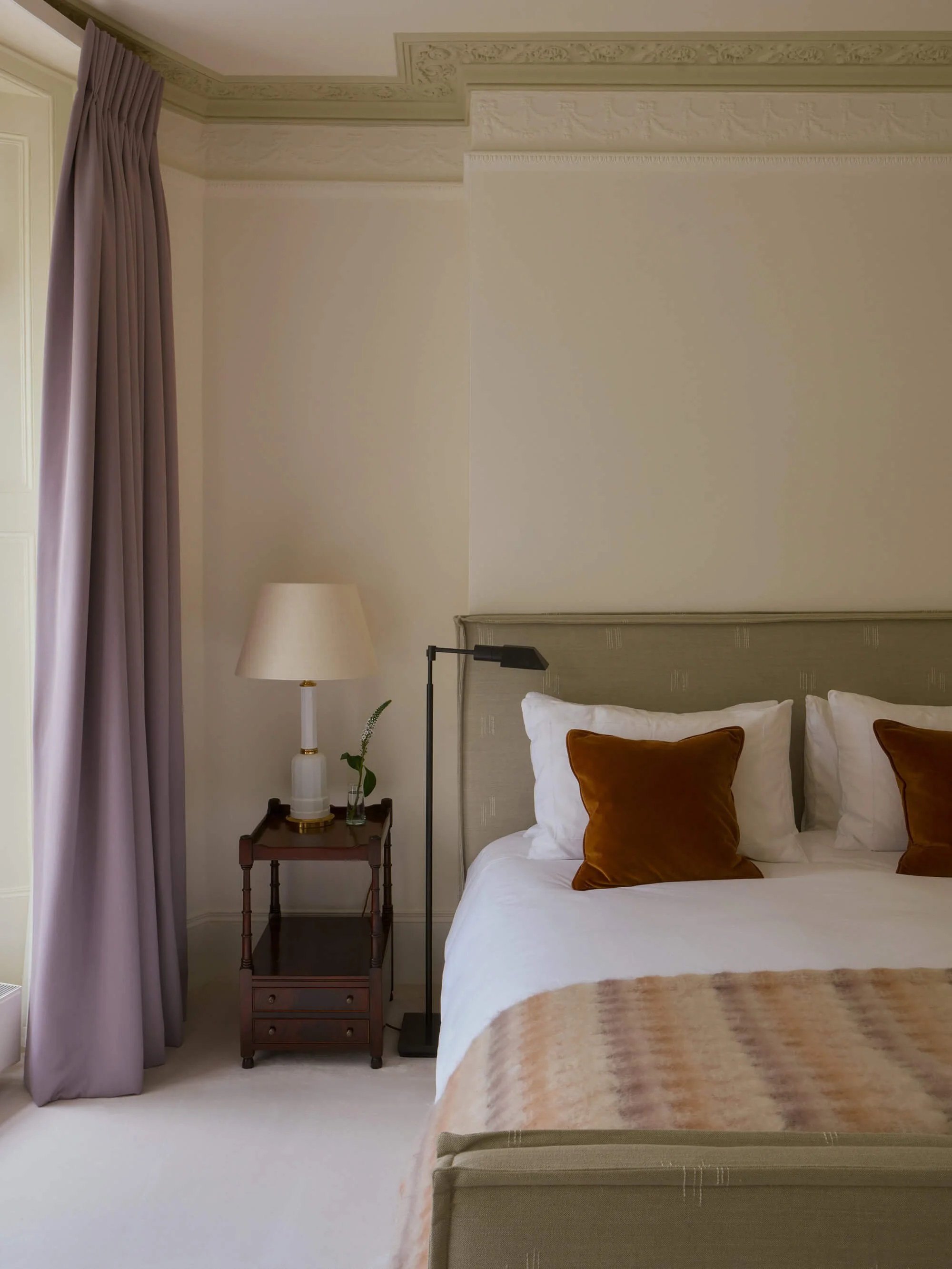
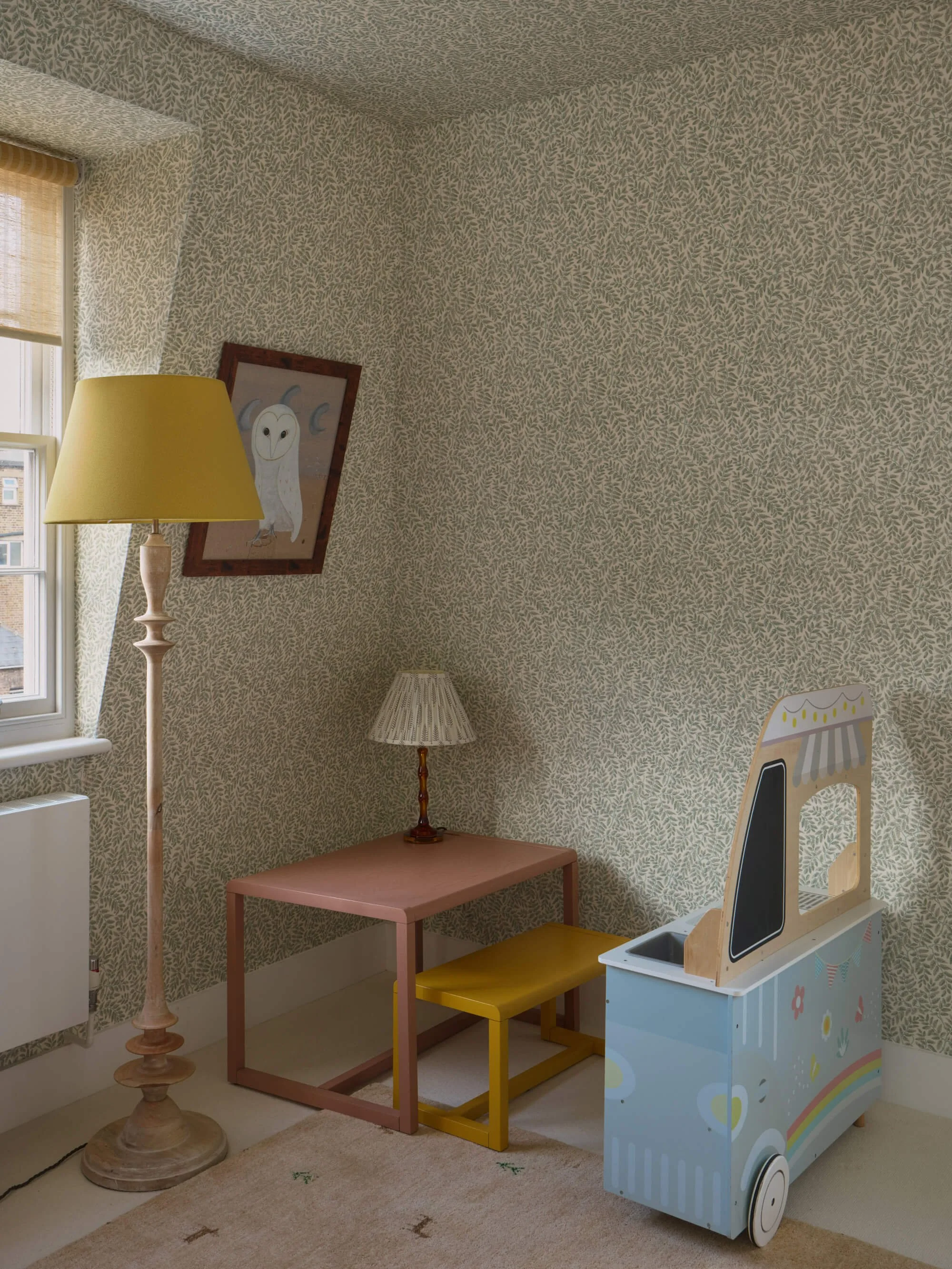
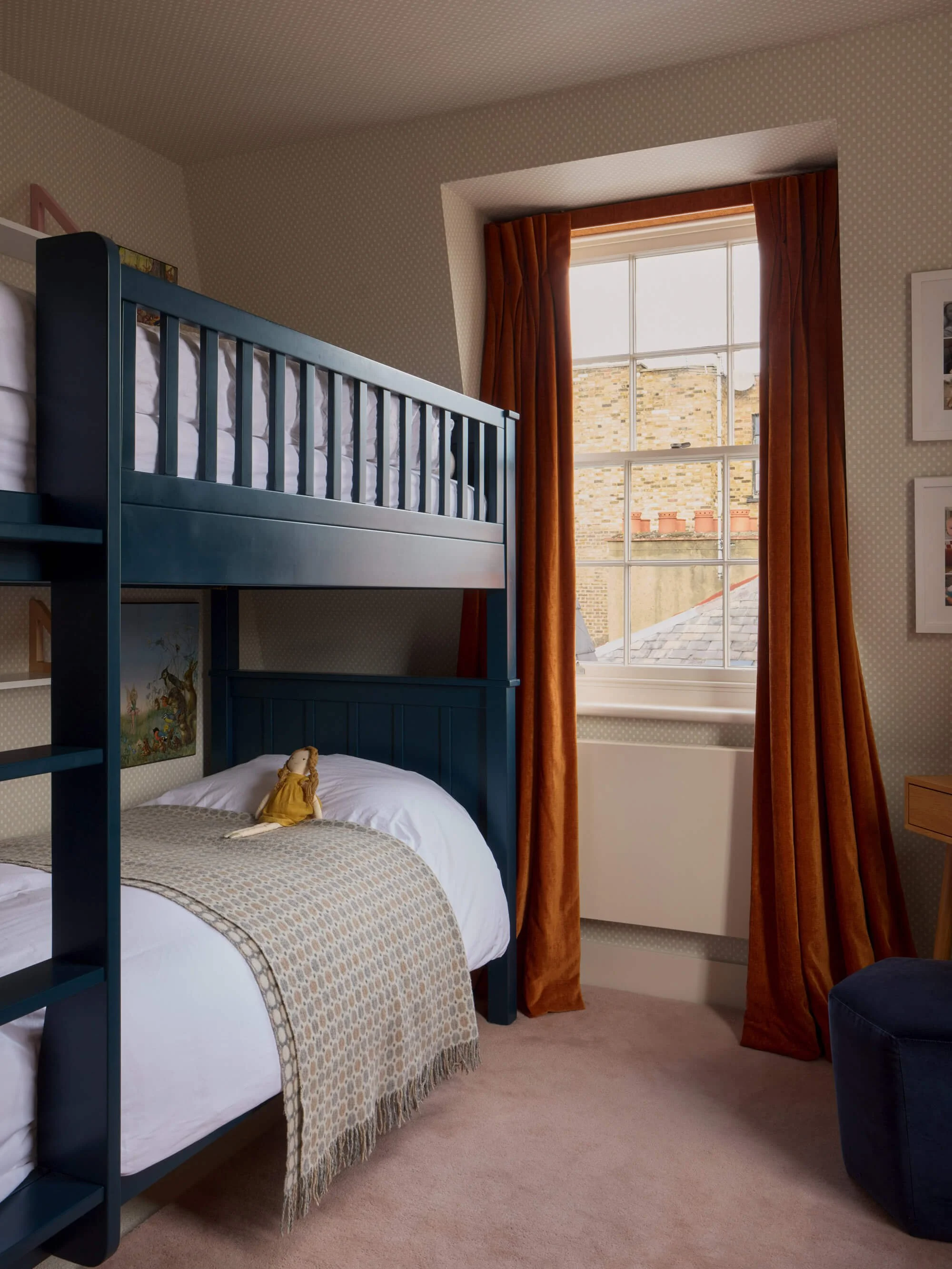
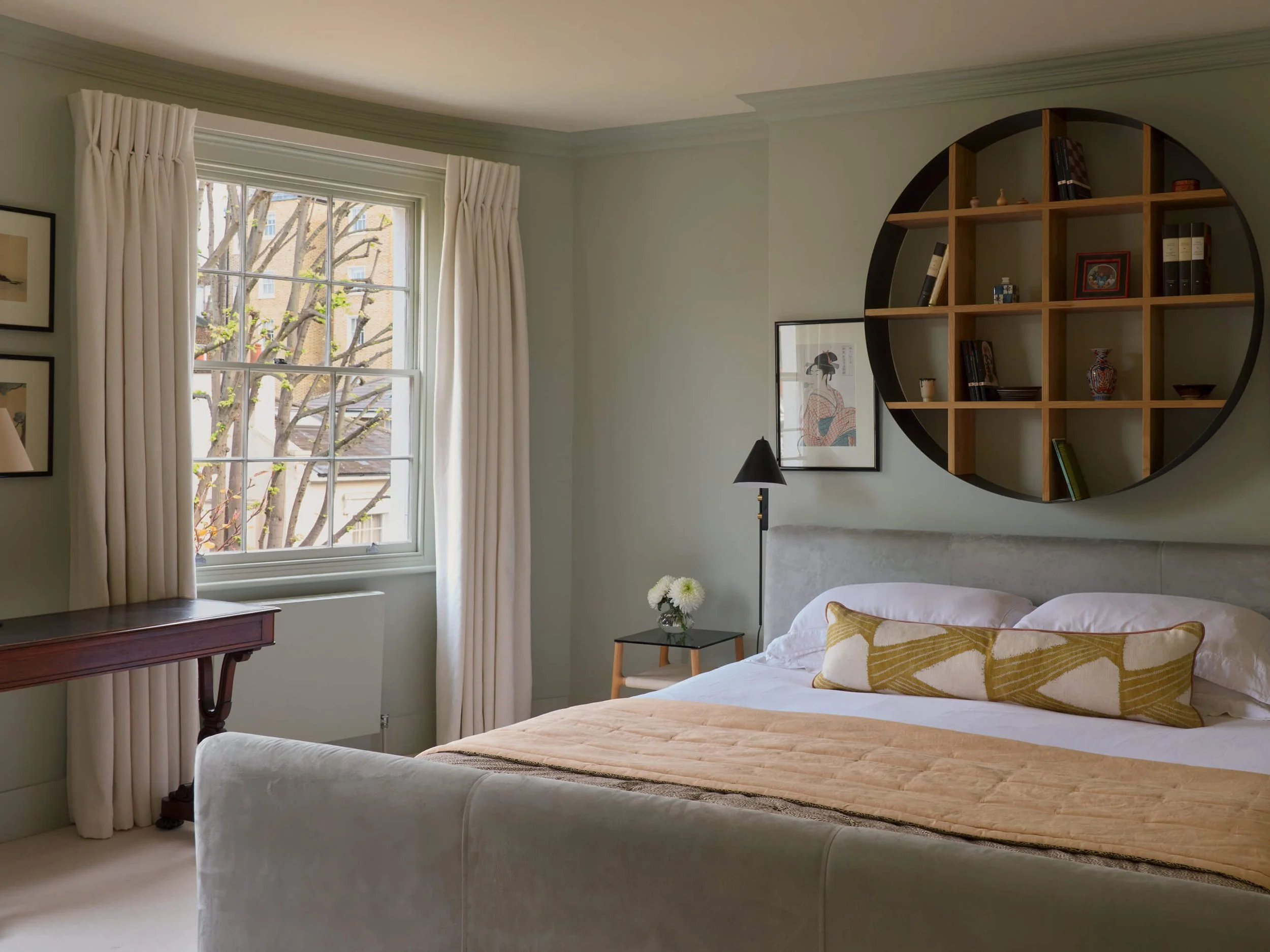
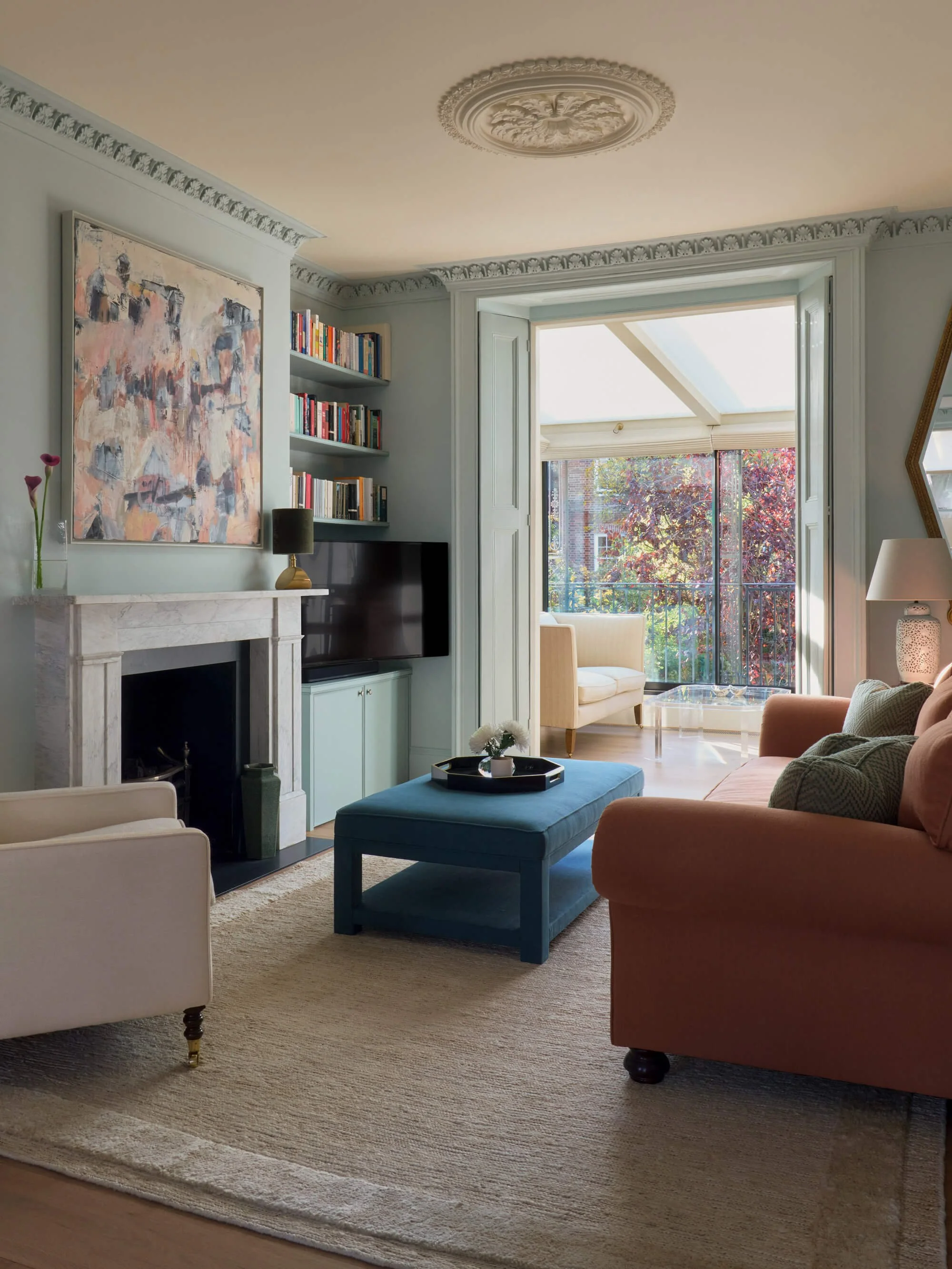
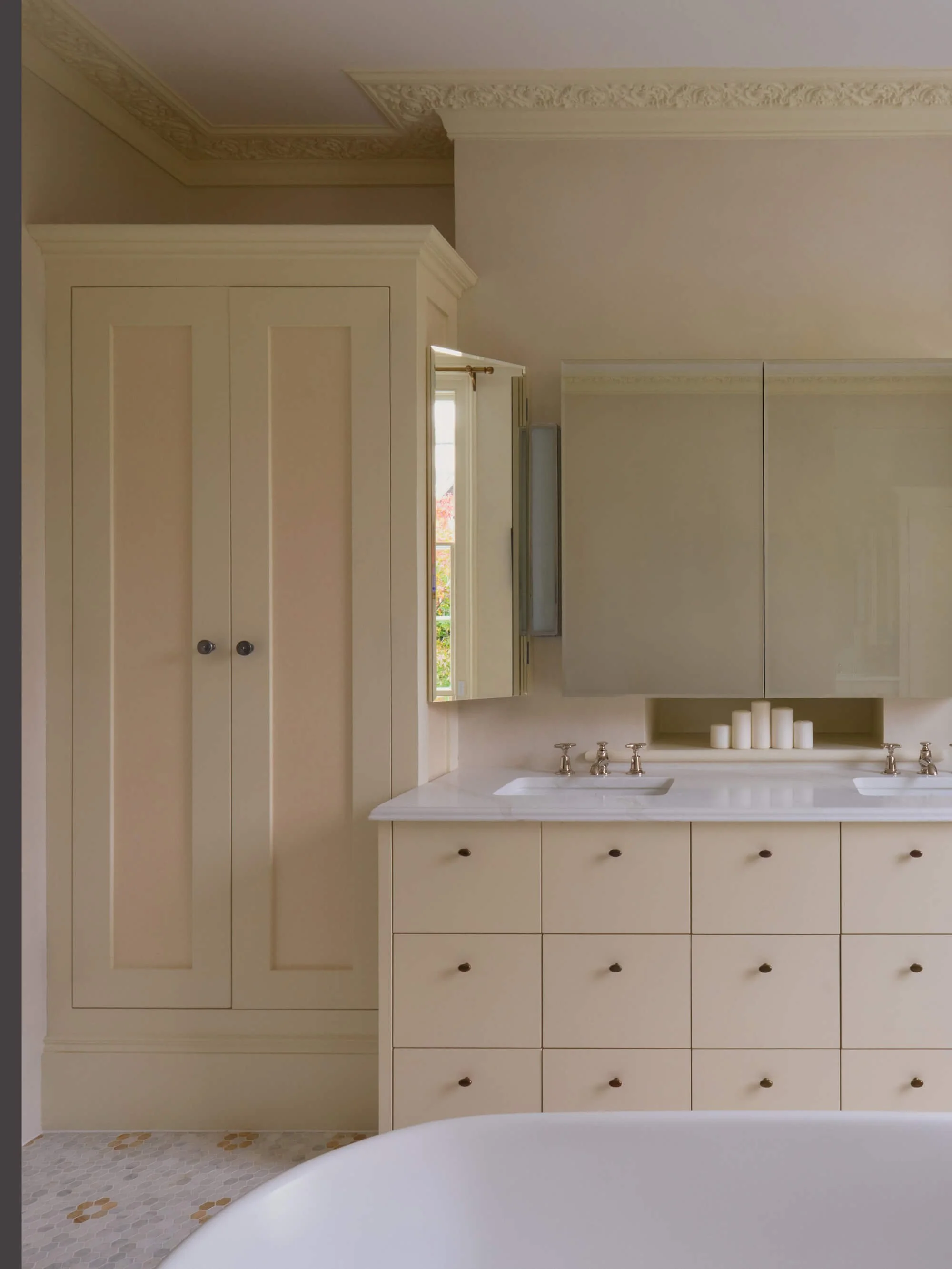
The intention was not to compete with the original mouldings, ironwork, and proportions—already in excellent condition—but to soften the formality often associated with such houses and introduce a quieter, more relaxed character. Colour drenching replaced the more conventional paint hierarchies typical of period townhouses, using muted tones such as Edward Bulmer’s Rose Tinted White and Ethereal Blue to create a soft, powdery palette. A layered material strategy combined plain, organic, tactile textures—jute and sisal carpets, rough linens, wool, limestone, marble, and papyrus-like blind fabrics—with a secondary layer of refined finishes to maintain elegance and avoid an overly rustic effect.
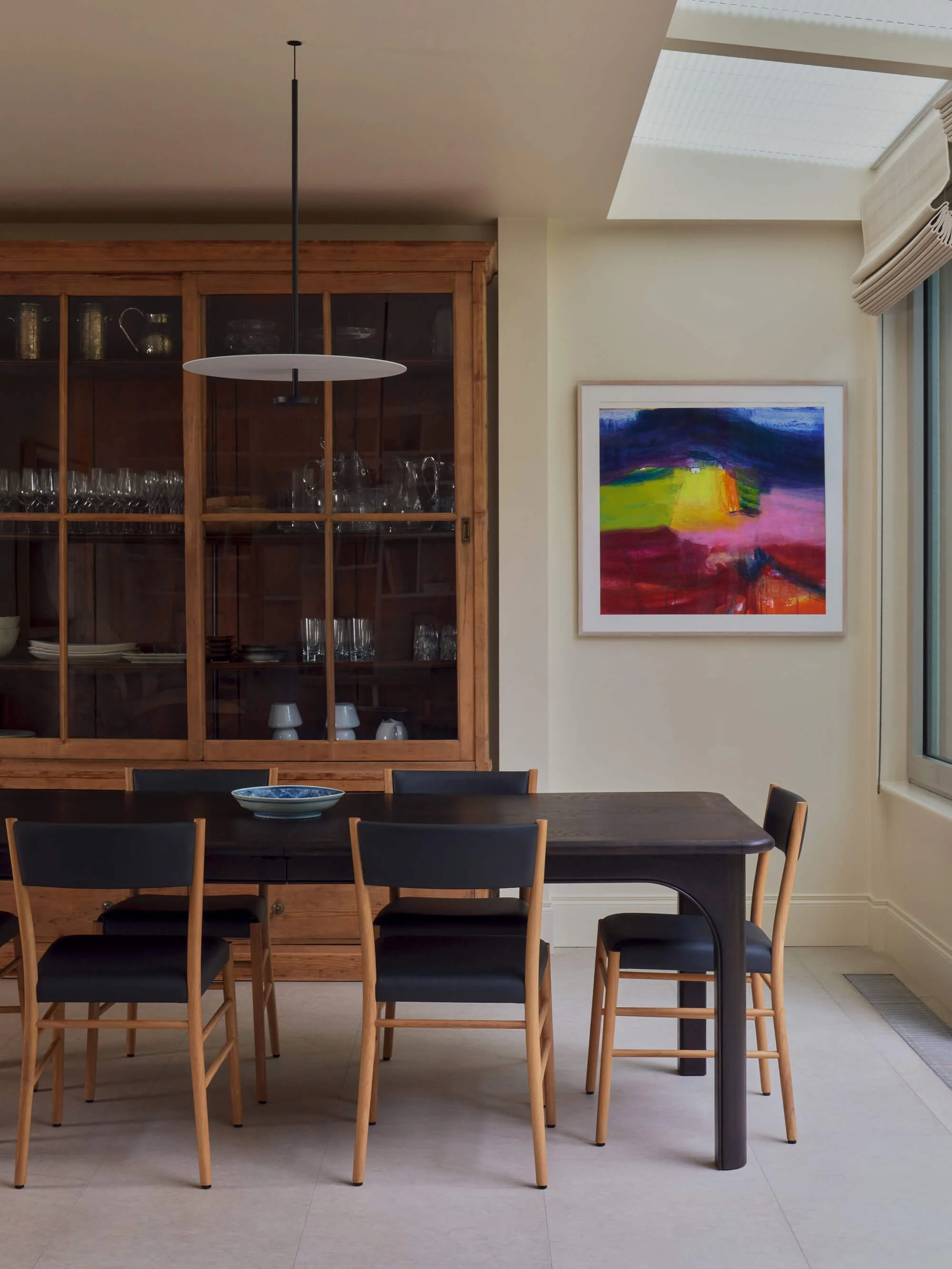
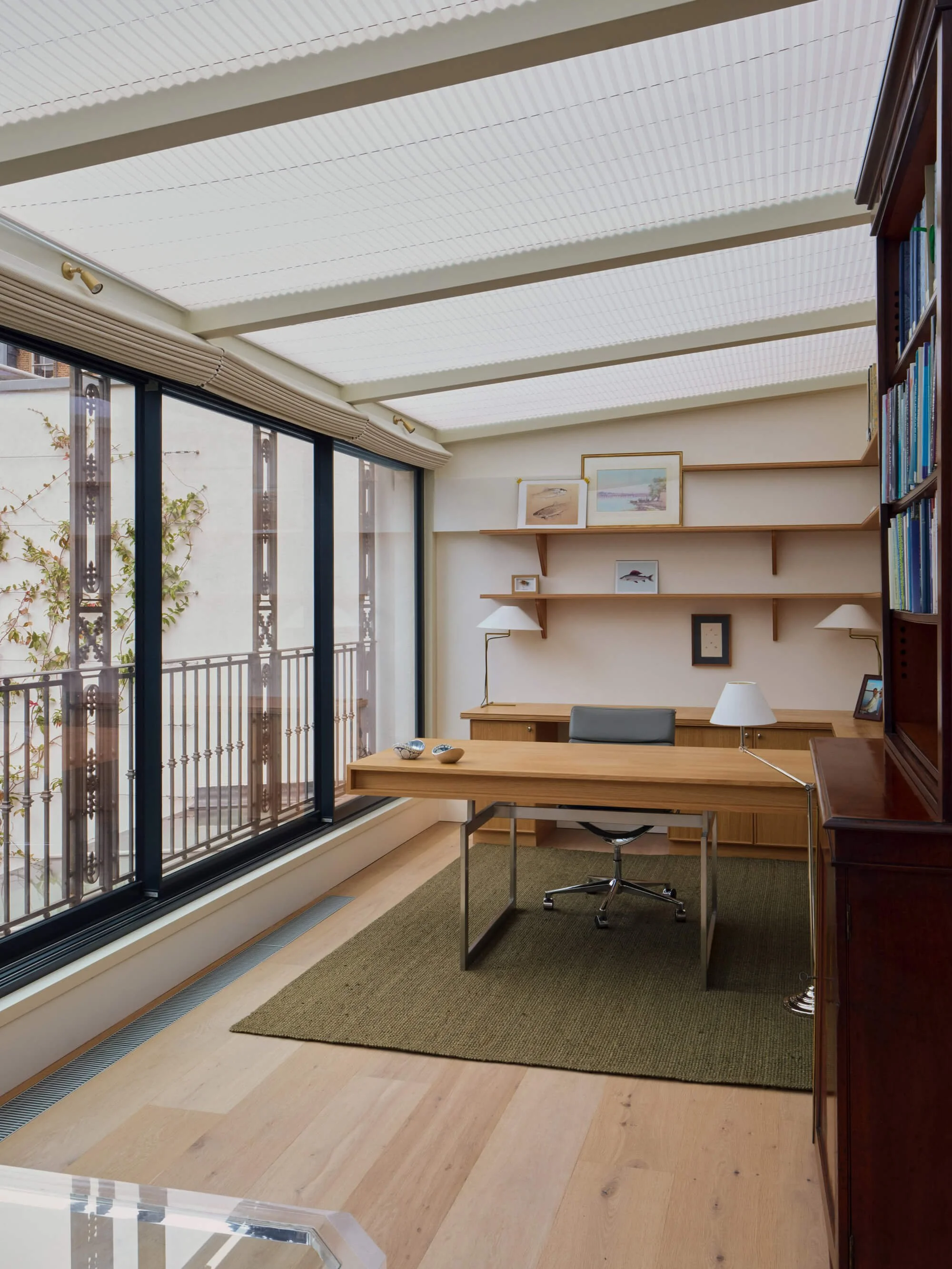
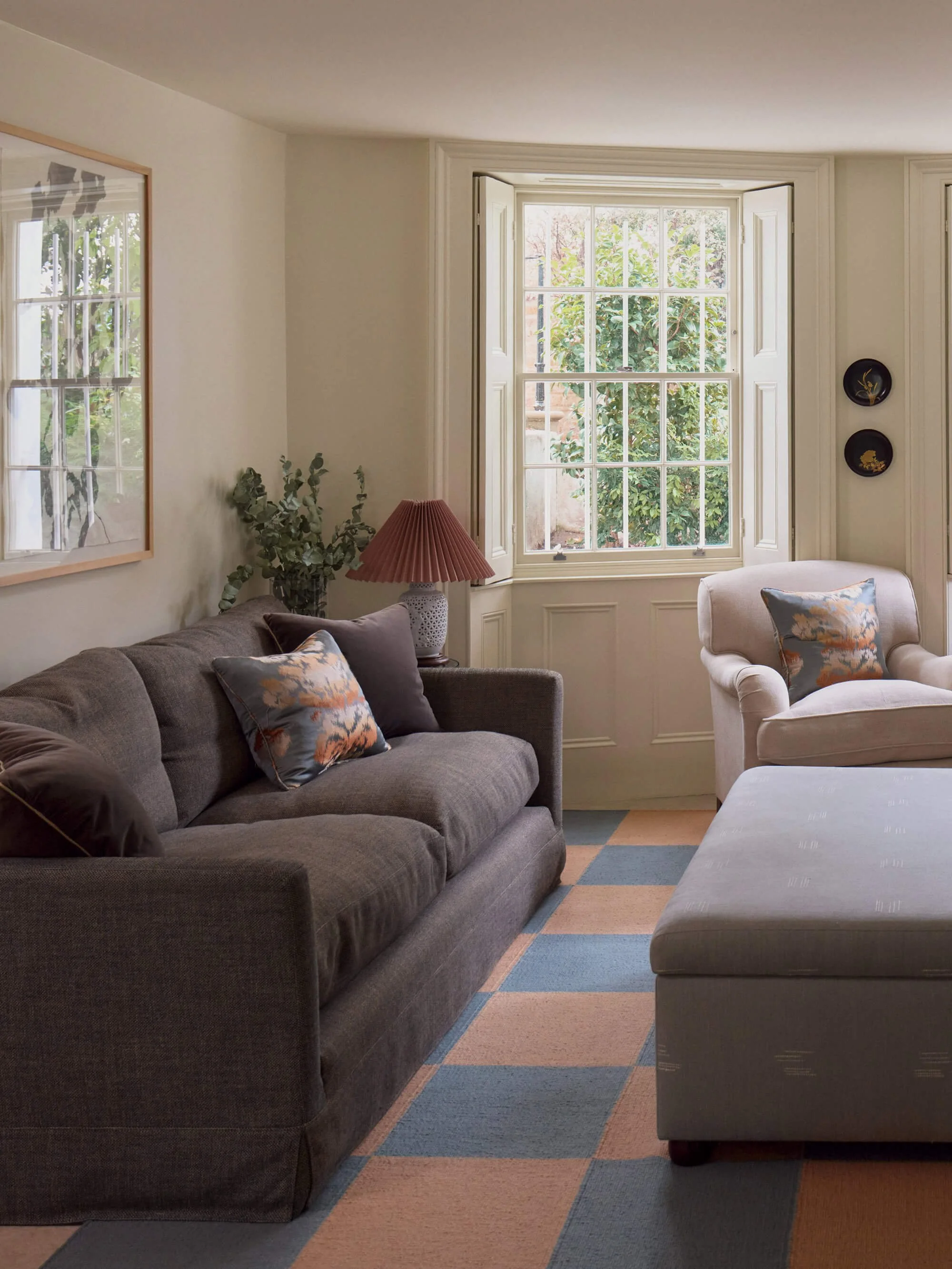
Furniture and fittings were selected through a balanced juxtaposition of traditional and contemporary elements, generally aiming for an even mix within each room: simple Georgian and William IV antiques alongside mid-century pieces, traditional sofa silhouettes upholstered in pared-back linens, and predominantly contemporary lighting and artwork.
IN SUMMARY
The overall composition prioritised restraint, allowing a few focal pieces to stand within uncluttered spaces. The result is an interior that bridges the refinement of a period townhouse with a softer, more natural aesthetic, subtly informed by a Japanese-Anglo sensibility while remaining practical for family life.